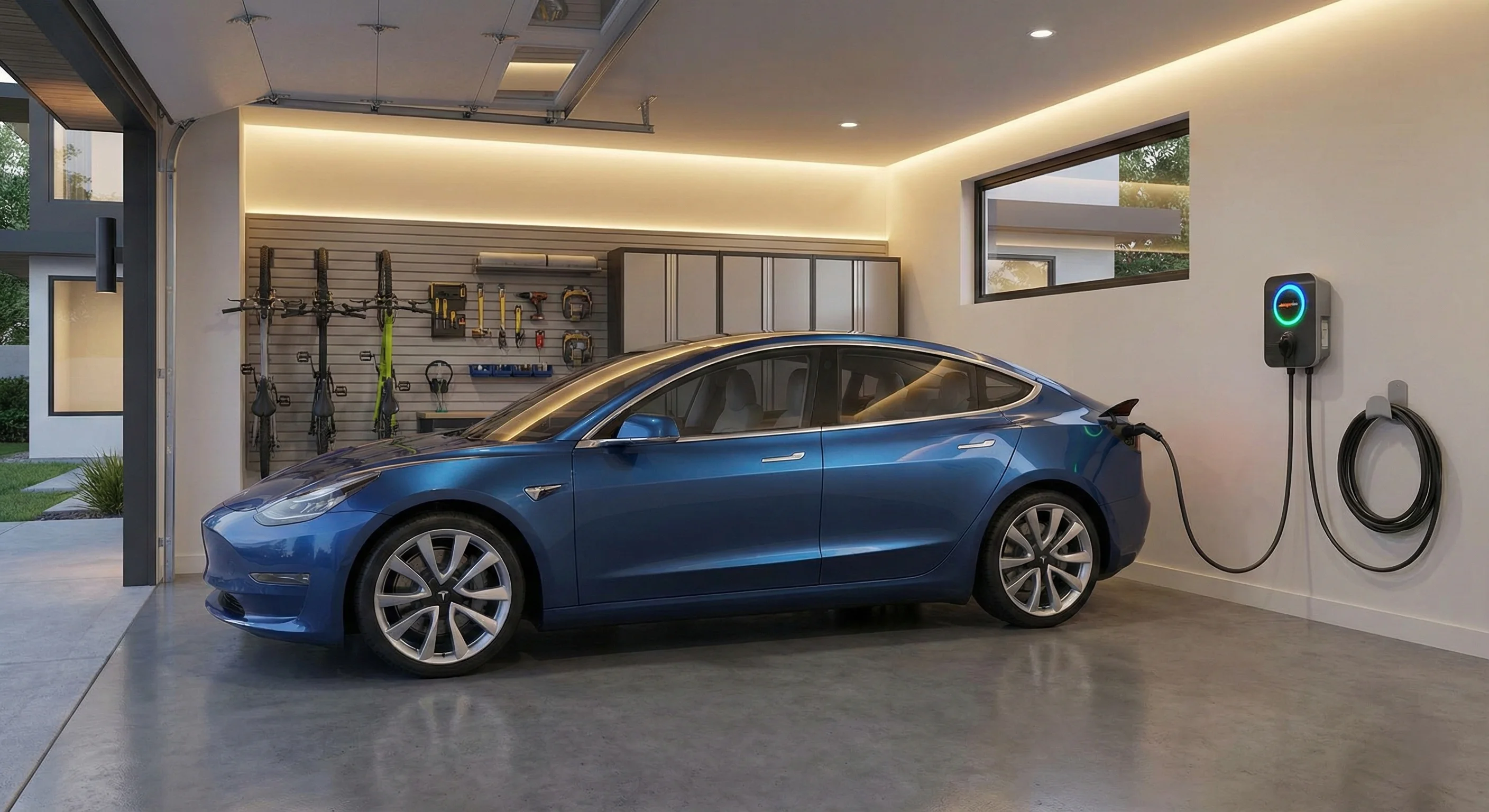
Hjemmelading er den mest praktiske og kostnadseffektive måten å lade elbilen på. Hvis du har en dedikert parkeringsplass med tilgang til strøm, kan du sannsynligvis lade hjemme. Her er alt du trenger å vite.
Basic Requirements
Dedicated Parking Spot
You need a consistent parking location where you can install a charger or access an outlet. This could be:
- Private garage
- Driveway
- Carport
- Assigned parking spot (with landlord approval)
Electrical Access
Your parking spot needs to be within reasonable distance of your electrical panel (typically 50-100 feet max).
Adequate Electrical Capacity
Your home's electrical panel needs sufficient capacity. Most modern homes (built after 1990) have 200-amp service which is plenty. Older homes may need upgrades.
Permission (if renting)
If you rent, you'll need landlord approval. Many states have "right to charge" laws requiring landlords to allow charger installation at tenant expense.
Home Charging Options
Level 1: Standard Outlet (120V)
Pros:
- • No installation needed
- • Free (uses existing outlet)
- • Works anywhere
Cons:
- • Very slow (3-5 mi/hr)
- • Takes 40+ hours for full charge
- • Only practical for PHEVs or very low mileage
Best for: Emergency backup, PHEVs, or if you drive less than 30 miles/day
Level 2: 240V Charger (Recommended)
Pros:
- • Fast charging (25-40 mi/hr)
- • Full charge overnight
- • Handles any daily driving
- • Adds home value
Cons:
- • Requires professional installation
- • Upfront cost ($500-2,000)
- • May need electrical panel upgrade
Charging Speed: 7.2-11 kW typical (25-40 miles of range per hour)
Best for: 95% of EV owners - the sweet spot for home charging
Installation Process
Choose Your Charger
Popular options include:
- ChargePoint Home Flex ($699)
- Grizzl-E ($399-499)
- JuiceBox ($589-789)
- Tesla Wall Connector ($475)
Get Quotes from Electricians
Contact 2-3 licensed electricians for quotes. Look for those with EV charger installation experience.
Site Assessment
Electrician will assess your electrical panel, determine wire run distance, and check if panel upgrade is needed.
Obtain Permits
Electrician typically handles permit applications (required in most areas).
Installation
Professional installation typically takes 3-8 hours depending on complexity.
Inspection & Activation
Local inspector verifies installation meets code, then you're ready to charge!
Installation Costs
Typical Cost Breakdown
Available Incentives
- • Federal Tax Credit: 30% of installation cost (up to $1,000) through 2032
- • Utility Rebates: Many power companies offer $250-500 rebates
- • State/Local Incentives: Additional rebates in some areas
- • EV Purchase Incentives: Some include charger installation credit
Månedlige driftskostnader
Eksempel: 1 500 km/måned
EV (3 mi/kWh efficiency):
333 kWh × $0.16/kWh = $53/month
Gas car (28 MPG):
36 gallons × $3.50/gal = $126/month
Monthly Savings: $83
Annual Savings: $996
Smart Charging Features
WiFi Connectivity
Control and monitor charging from your phone, schedule charging times, track energy usage.
Time-of-Use Scheduling
Automatically charge during off-peak hours when electricity is cheapest (save 30-50%).
Load Balancing
Adjusts charging speed to prevent overloading your home's electrical system.
Solar Integration
Some chargers can prioritize solar power when available, maximizing green energy use.
Apartment & Condo Dwellers
Know Your Rights
Many states have "right to charge" laws:
- California, Colorado, Florida, Hawaii, Oregon, and others
- Landlords cannot unreasonably deny installation requests
- Tenant typically pays installation costs
Steps for Renters
- Check if building already has EV charging
- Review your lease and local laws
- Get installation quote from electrician
- Submit formal written request to landlord
- Offer to pay all costs and restore on move-out
- Consider portable charger if installation denied
Konklusjon
If you own your home: Installing a Level 2 charger is straightforward and highly recommended. Cost is $700-2,000 with incentives available.
If you rent: Check building amenities first, then request installation permission. Many states protect your right to charge.
ROI: Home charging saves $800-1,500/year on fuel. Installation pays for itself in 1-2 years.
Convenience: Waking up with a full charge every day is a game-changer. Most owners say they'd never go back to gas stations.